Encouraging STEM at Home for Families with Curious Kids
- Jarred Melendez

- Aug 21, 2025
- 3 min read
Updated: Nov 24, 2025
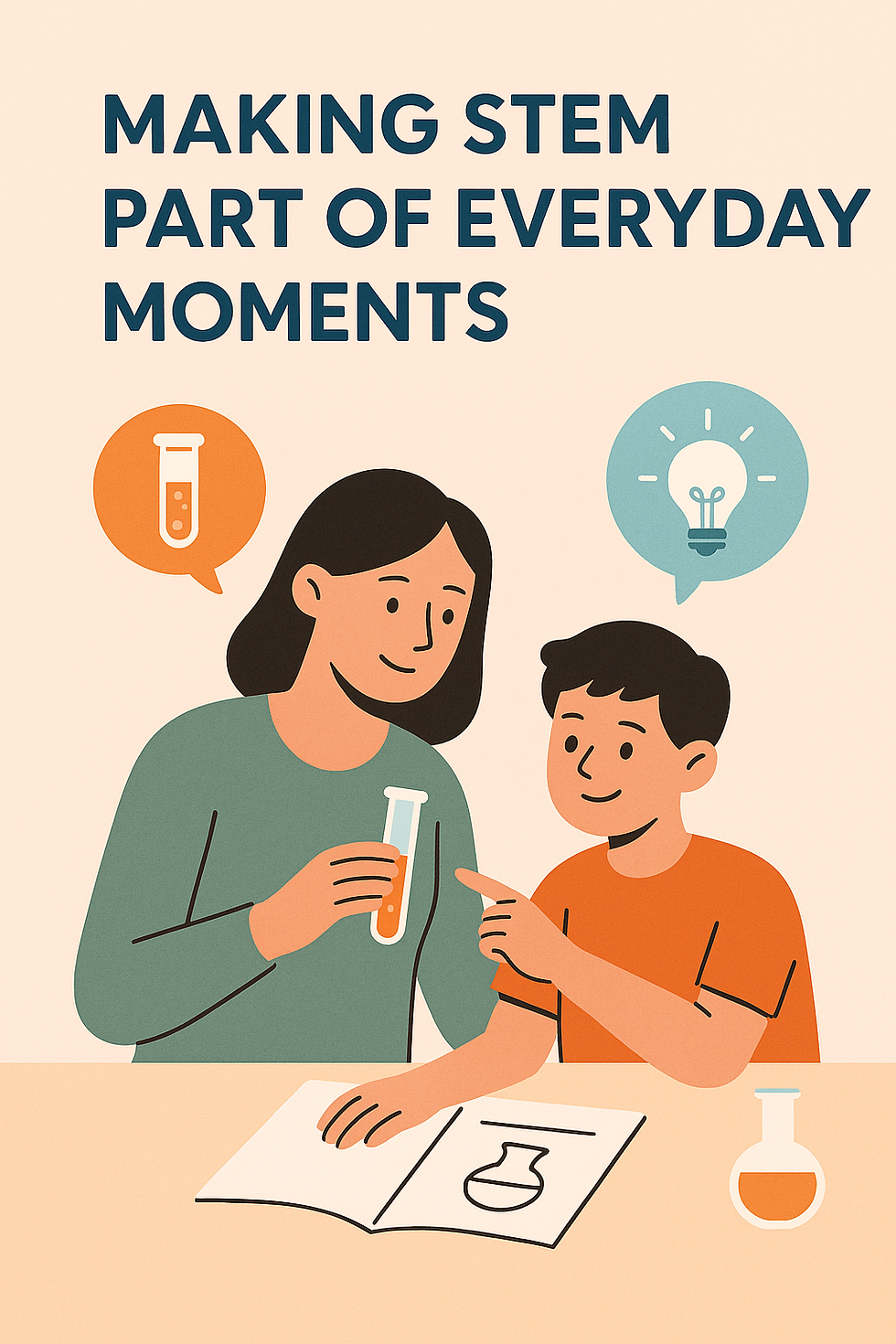
STEM learning does not live only inside classrooms or lesson plans. In fact, some of the most meaningful learning moments happen at home, in the middle of everyday life. A child wondering how something works, experimenting with household items, or asking thoughtful questions at the dinner table is already engaging in STEM thinking.
The role of families is not to replicate school. It is to create an environment where curiosity feels natural and exploration is welcomed.
That is where lasting interest in STEM begins.
STEM at Home Does Not Require Expertise
Many parents believe they need a strong background in science or math to support their child’s interest in STEM. That is simply not the case. What matters most is presence, encouragement, and an openness to learning alongside their child.
When adults embrace curiosity instead of rushing to provide answers, children feel safe to explore ideas on their own. That sense of freedom builds independence and confidence over time.
You do not need all the answers. You only need a willingness to ask the right questions.
Everyday Moments Become Learning Opportunities
STEM learning at home often appears in small, organic ways. These moments do not require structured lessons or formal tools.
Examples include:
Measuring ingredients while cooking
Observing how water behaves in different containers
Fixing a toy together and discussing why it broke
Talking about why the sky changes color
Comparing how fast objects move on different surfaces
These simple interactions teach problem solving, logic, observation, and reasoning without feeling like homework.
Creating a Home Environment That Supports Exploration
A supportive environment gives children permission to try, test, fail, and try again. That mindset is far more valuable than focusing on results or speed.
Helpful habits for families include:
Keeping simple supplies available for building and experimenting
Encouraging questions instead of dismissing them
Letting kids explain their thinking
Celebrating effort and persistence
Allowing space for imagination and problem solving
These approaches nurture confidence and intrinsic motivation.
How STEM Team Oliver Supports Learning at Home
The STEM Team Oliver series offers families a shared reference point for exploring ideas together. Reading a chapter together can open the door to conversation, creativity, and hands on engagement without pressure.
Parents might ask:
What did you like about how they solved that
Which character would you have chosen to help
What would you try in that situation
How could we test something like this at home
This strengthens connection while reinforcing learning in a natural way.
Turning Curiosity Into Confidence
When children experience STEM as something approachable, their self perception shifts. They stop seeing science and math as intimidating and start seeing them as tools they can engage with.
Confidence forms when they feel heard, supported, and encouraged to explore ideas in their own way.
This carries into the classroom, friendships, and future learning experiences.

Supporting Different Ages and Learning Styles
STEM learning at home looks different for each child. Younger kids may enjoy playful experimentation. Older kids might prefer building more complex projects or exploring deeper questions.
Families can support this by:
Matching activities to interest level
Allowing kids to guide the direction
Offering options instead of instructions
Respecting individual pace and curiosity
There is no single method. The key is flexibility and openness.
Small Efforts That Make a Big Difference
You do not need elaborate setups or complex tools to support STEM thinking. Often, the most powerful moments come from shared attention, thoughtful questions, and simple exploration.
Children remember how learning made them feel far longer than the details of the activity.
Building a Culture of Curiosity
When families treat questions as welcome and experimentation as normal, children learn that discovery is part of everyday life. They grow comfortable exploring ideas beyond their comfort zone.
That comfort becomes confidence. That confidence becomes capability.
STEM as a Shared Experience
STEM learning at home is not about perfection. It is about connection, exploration, and the joy of discovering something together.
STEM Team Oliver supports this by giving families a relatable way to engage with meaningful ideas, fostering conversations that continue long after the final page.
When curiosity is encouraged at home, learning becomes part of who children are, not just something they do for school.


Comments