How Early STEM Experiences Shape the Way Kids Think Long Term
- Jarred Melendez

- Aug 28, 2025
- 3 min read
Updated: Nov 25, 2025
Long before a child ever considers a future career, they are already forming beliefs about learning, problem solving, and their own ability to figure things out. These early impressions quietly influence how they approach challenges, make decisions, and engage with unfamiliar ideas as they grow.
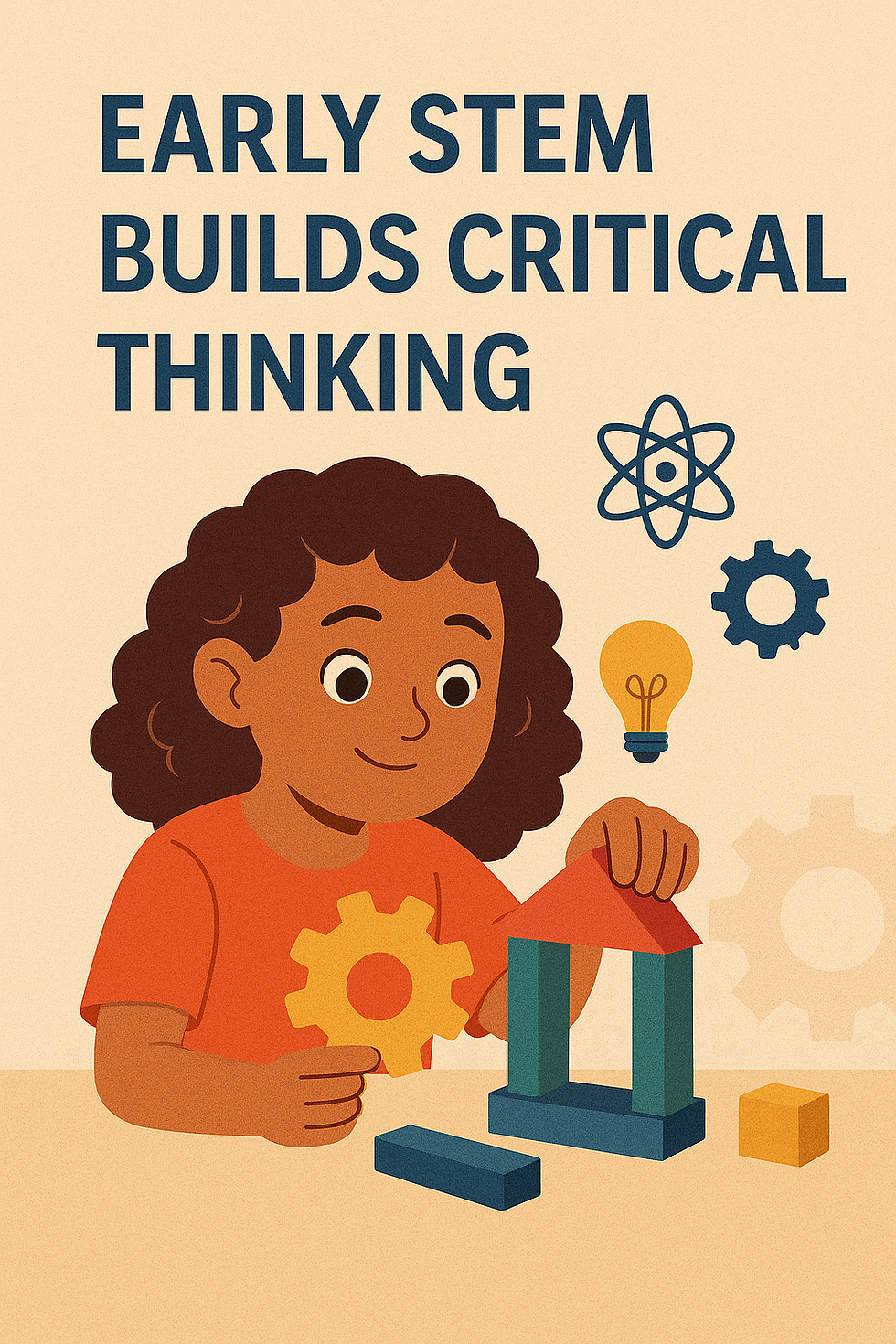
STEM experiences in childhood play a significant role in that development. Not because they turn every child into an engineer or scientist, but because they shape the way children think.
Learning How to Approach a Problem
One of the most lasting effects of early STEM exposure is perspective. Children begin to see problems not as obstacles but as puzzles that can be worked through.
Instead of feeling stuck, they start asking:
What is happening here
Why might this be happening
What could I try next
That curiosity driven approach becomes a habit over time. It extends beyond science or math and naturally carries into reading, communication, teamwork, and decision making.
Strengthening Independent Thinking
Early STEM experiences encourage children to rely on their own reasoning instead of always waiting for instruction. They learn that ideas can be tested, adjusted, and improved.
This builds early independence, where children:
Feel comfortable exploring new ideas
Trust their ability to make thoughtful choices
Adapt when something does not go as planned
Stay engaged even when answers are not immediate
These traits serve them well far beyond the classroom.
The Link Between Curiosity and Confidence
When children are given space to explore and experiment, curiosity becomes familiar instead of intimidating. Over time, that comfort turns into confidence.
They stop hesitating before trying something new. They start speaking up more often. They become more willing to take academic and creative risks.
That confidence is not loud or flashy. It is steady. It shows up in how they approach unfamiliar tasks, communicate ideas, and persist through challenges.
How STEM Team Oliver Reinforces These Foundations
The STEM Team Oliver series introduces these early thinking patterns through relatable scenarios and character decisions. Instead of focusing only on outcomes, the stories highlight how the characters approach each situation.
Students see characters:
Talk through their ideas
Adjust plans when something fails
Support one another through uncertainty
Take ownership of the process
These moments quietly reinforce the message that learning is active and evolving.
Building Skills That Extend Beyond STEM
The value of early STEM is often misunderstood as being limited to technical knowledge. In reality, the influence is far broader.
These experiences support:
Communication and collaboration
Critical thinking and reasoning
Emotional regulation when frustrated
Logical planning
Creative exploration
Preparing Kids for an Evolving World
The future will continue to change at an accelerating pace. Technology, systems, and industries will shift. Careers will evolve. What remains vital is the ability to think clearly and adapt.
Children who grow up engaging with STEM concepts early develop flexibility in how they approach unfamiliar territory. They become more comfortable learning new systems because they have already practiced navigating uncertainty.

Creating a Healthier Relationship With Learning
Early STEM exposure shapes a child’s emotional relationship with learning. When learning is framed as exploration instead of evaluation, children are more likely to enjoy the process.
They associate growth with progress rather than pressure and begin to view mistakes as informative rather than embarrassing.
That emotional safety becomes a powerful foundation for long term success.
Developing Thoughtful Problem Solvers
The ultimate impact of early STEM experiences is not a specific career path. It is the development of thoughtful problem solvers.
Children learn to observe carefully, learn to question respectfully, and learn to reflect on what did not work and try again with new insight.
These characteristics form the backbone of resilience and innovation.
The Role of Story in Shaping Perspective
Story based learning, such as STEM Team Oliver, helps anchor abstract thinking skills into meaningful experiences. Rather than approaching learning as a checklist, students walk alongside characters navigating real challenges.
This narrative approach reinforces that growth takes time and that progress happens through effort, curiosity, and collaboration.
Looking Ahead With Intention
The habits children form today influence how they approach the world tomorrow. Early STEM experiences give them tools to think with purpose, explore confidently, and respond thoughtfully to new situations.
STEM Team Oliver supports this growth by providing stories that mirror the real learning process. Not polished outcomes, but meaningful progress.
And that progress shapes the thinkers, creators, and problem solvers of the future.


Comments